Scopus Indexed – Springer Publication (approval in process)
2nd INTERNATIONAL CONFERENCE ON INTELLIGENT
SYSTEMS AND COMPUTATIONAL STRATEGIES
IN ENGINEERING AND TECHNOLOGY (ICICET 2206)
University Canada West (UCW), Vancouver, BC, Canada
AUGUST 21-22, 2026
Past Conference Link: ICICET 2025
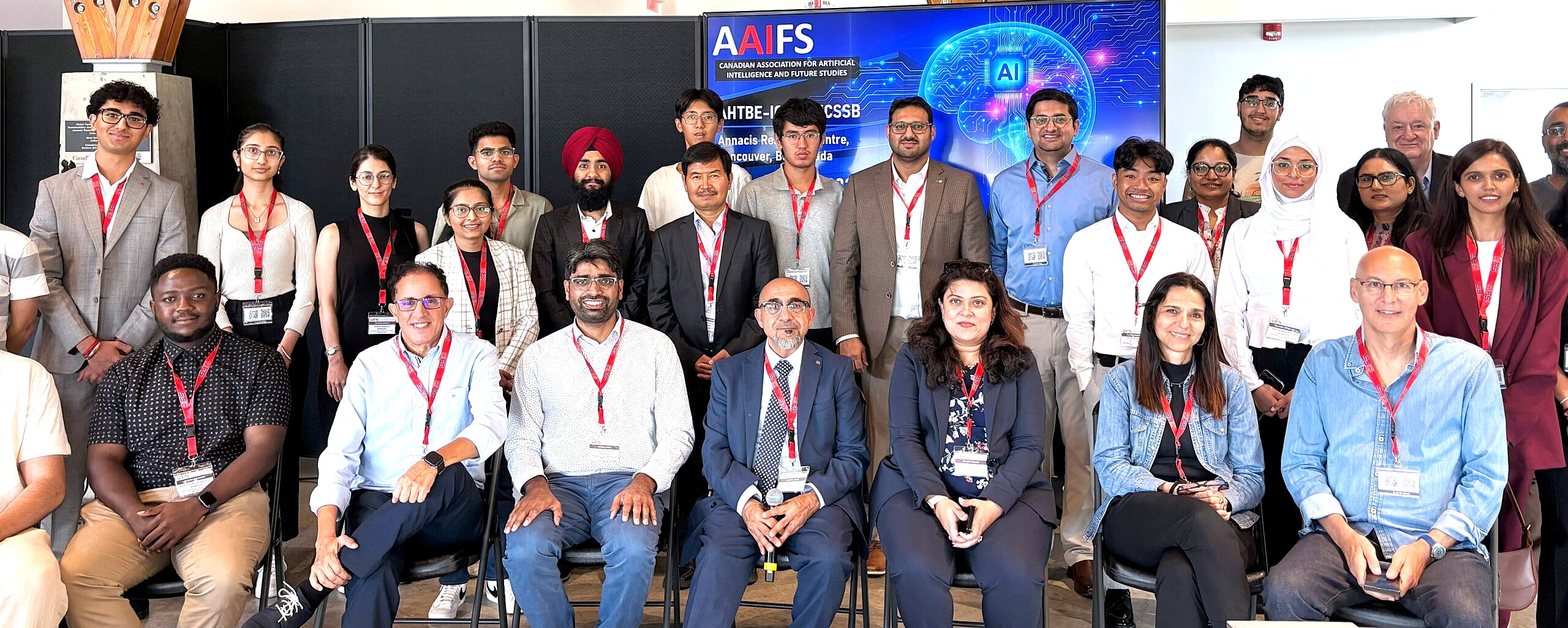
Access the photo galleries of past years’ ICICET 2025:
Award Ceremony Gallery | Keynote Speeches Gallery | Author Presentations
Welcome to 2nd ICICET 2026
We are delighted to invite you to the 2nd International Conference on Intelligent Systems and Computational Strategies in Engineering and Technology (ICICET), scheduled to take place from August 21-22, 2026, University Canada West (UCW), Vancouver, BC, Canada. ICICET 2026 aims to provide a platform for experts to exchange knowledge, present groundbreaking research, and explore emerging trends in intelligent systems, computational strategies, and engineering technologies. We invite you to submit your original research contributions and be part of this dynamic gathering of scholars and professionals discussing the future of intelligent and computational technologies. Accepted and presented papers will be published in Scopus-indexed proceedings, ensuring global visibility and impact. Join us in Vancouver, a city known for its stunning landscapes, technological advancements, and vibrant scientific community. We look forward to welcoming you to ICICET 2026.
Important Dates
April 27, 2026
Article/Abstract/Poster Submission Deadline
(Extended)
May 20, 2026
Notification of Acceptance
Decisions in process
April 30, 2026
Registration Deadline (Early bird)
May 30,
2026
Camera-Ready Submission
Conference Scope
ICICET spans the domain of computer science, engineering, and information technology. The conference seeks research contributions in the below tracks.
General areas of interest to ICICET include but are not limited to:

Track 1: Artificial Intelligence & Machine Learning
Deep Learning & Neural Networks
Explainable AI & Ethical AI
Reinforcement Learning & Optimization
Computer Vision and Image Processing
AI and Federated Learning
Ethics, Fairness, and Interpretability in AI/ML

Track 2: Cybersecurity & Privacy in Intelligent Systems
AI for Cyber Threat Detection & Prevention
Blockchain for Security & Privacy
Cryptography & Secure Computing
Adversarial Attacks & AI Robustness
Digital Forensics & Cybercrime Analysis
Identity & Access Management in AI Systems

Track 3: Computational Strategies in Engineering & Optimization
Smart Grid & Renewable Energy Optimization
Computational Fluid Dynamics
Structural Health Monitoring & Smart Materials
Intelligent Transportation & Traffic Management
Civil & Mechanical Engineering Simulations
AI for Manufacturing & Supply Chain Optimization
Track 4: Cloud Computing, Edge Computing & Big Data
Scalable Cloud & Edge Computing Architectures
Big Data Analytics & Visualization
Distributed Computing & HPC
Serverless Computing & Microservices
Data Engineering & ETL Processes
Energy-Efficient Cloud & Green Computing
Track 5: Business Driven Smart Energy Systems and Intelligent Technologies
Smart City Technologies
IoT, mobility, waste and Intelligent transportation
Renewable energy optimization and AI-based grid
Quantum Computing & Quantum ML
Sustainable and AI-driven Urban Ecosystems
Business intelligence for smart governance
Track 6: Digital Twin Technology & Intelligent Systems
Digital Twin Modeling & Simulation
AI-Driven Predictive Maintenance
Real-Time Monitoring & Decision Support Systems
Digital Twin in Manufacturing & Industry 4.0
Smart Infrastructure & Urban Planning
Digital Twins with IoT & Edge Computing
Track 7: Quantum Computing & Next-Generation Computing Paradigms
Quantum Machine Learning & AI Applications
Quantum Cryptography & Communications
Quantum Algorithms for Optimization & Simulation
Quantum Computing Hardware & Architectures
Post-Quantum Cryptography & Challenges
Hybrid Quantum-Classical Computing Models
Track 8: Intelligent Systems in Healthcare
AI-Driven Structural Health Monitoring
Biomedical imaging and signal processing
AI and ML in diagnostics and patient care
Smart Materials & Intelligent Infrastructure
Bioinformatics and computational biology
Medical robotics and assistive technologies
Digital Twin Applications in Healthcare
Track 9: Advances and Applications of Large Language Models (LLMs)
Foundations and Architectures of LLMs
Training, Efficiency, and Optimization
LLMs in Natural Language Understanding
Ethics, Fairness, and Bias in LLMs
Applications of LLMs in Industry and Research
Future Directions and Innovations in LLMs
Track 10: Business Intelligence and Advanced Data Analytics
Financial Analytics, FinTech, and Risk Modeling
Marketing Intelligence, and Personalization
Supply Chain, Logistics, and Operations Analytics
Business Process & Organizational Intelligence
Enterprise Intelligence and Strategic Analytics
Industry Applications of Business Intelligence
Track 11: Digital Entrepreneurship and Innovation Systems
Tech Entrepreneurship and Startup Ecosystems
Digital Business Models and Platform Economies
Innovation in AI-Driven Organizations
Technology Transfer, Commercialization, and IP
Digital Transformation for Enterprises and SMEs
Policy, Regulation, & Governance of Emerging Tech
Track 12: AI-Enabled Education and Learning Technologies
Intelligent Tutoring & Adaptive Learning Platforms
Learning Analytics & Educational Data Insights
AI-Supported Curriculum Design & Assessments
Digital Skills for AI & Emerging Technologies
Assistive & Inclusive Learning Technologies
Ethics, Policy, and Governance of AI in Education
Delighted to have following
Guest Speakers and Industry Experts

Guest Speaker
Musfiq Rahman, Ph.D.
Chair of the Computing Science Department and an Associate Professor specializing in AI, Network Security, Wireless Sensor Networks, NFC, and Computer Vision at Thompson Rivers University, Canada.
For more details about his research work:
University Profile

Guest Speaker
Nazeeruddin Mohammad, Ph.D.
Associate Professor specializing in Cybersecurity, AI, Computer Vision, and IoT Technologies, Computer Science Department at
Adelaide University, Australia.
For more details about his research work:
Google Scholar
Collaborators and Sponsors

Technical Sponsor
University Canada West, Vancouver, Canada

Technical Sponsor
University of Minnesota Crookston, United States

Technical Sponsor
Superior University,
Lahore, PK

Media Partner
Electronics Journal, MDPI, Basel, Switzerland

Financial Sponsor
Canadian Association for Artificial Intelligence and Future Studies

Acknowledgement
Microsoft CMT
Management System

Technical Partner
Inspire Academic Press Inc.
Canada

Technical Partner
PreBinary Smart Solutions
Redefining Learning with AI

The technical objective of ICICET is to showcase research papers, receive prompt feedback from attendees, and feature in-depth presentations by distinguished invited researchers.
Conference Organizers
Latest News
Publication
All accepted and presented full papers will be published in the indexed Conference Proceedings / peer-reviewed open access Journal. Furthermore, regular papers presented at the conference will be submitted to be indexed by EI/ISI, SCOPUS, and other databases. Selected papers may also be invited for extended versions in indexed journals.